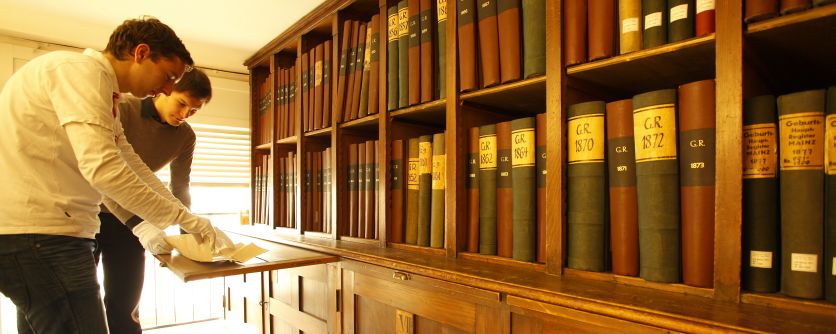
Only those who look far can see enough: Teaching and research at the Department of History is guided by this fundamental conviction. We can only understand history in all its facets from a wide angle and a broad perspective – and only then can we comprehend our own time. For this reason, both the degree programs and the research work focus on all of history from antiquity to the present and from the Rhine Valley to world politics. European history is understood to be pan-European history and encompasses Eastern Europe and the Mediterranean region.
The bachelor’s degree programs in History (B.A. major and minor, B.Ed.) are undergraduate degree programs which qualify you for a profession.
The degree programs M.A. History (specialized subject) and M.Ed. History (teacher training for Gymnasium) build on the bachelor’s degree programs. You can only enter these programs if you have a corresponding bachelor’s degree
In addition, we offer binational degree programs with the Université Bourgogne Europe in Dijon (M.A. and M.Ed.).
Start of term
-
Begrüßung der neuen Bachelorstudierenden
Instructor: Dr. Andreas Frings -
Begrüßung der neuen Masterstudierenden
Instructor: Dr. Andreas Frings
Lecture
-
Vorlesung 1
Instructor: N.N. -
Vorlesung 2
Instructor: N.N. -
Vorlesung 3
Instructor: N.N. -
Vorlesung Alte Geschichte: Griechische Kolonisation
Instructor: Univ.-Prof. Dr. Thomas Blank -
Vorlesung Längsschnitt / Internationale Geschichte: Geschichte der Rechtsprechung
Instructor: Univ.-Prof. Dr. Nina Gallion; Univ.-Prof. Dr. Marietta Horster; Univ.-Prof. Dr. Michael Kißener; Univ.-Prof. Dr. Matthias Schnettger -
Vorlesung Mittelalter: Europa im Frühmittelalter (ca. 500-900). Antikes Erbe und neue politisch-kulturelle Formationen
Instructor: Univ.-Prof. Dr. Ludger Körntgen -
Vorlesung Mittelalter: Stadt im Mittelalter
Instructor: Dr. Regina Schäfer -
Vorlesung Neuzeit: Weltgeschichte im Zeitalter des Ost-West-Konflikts (II)
Instructor: Univ.-Prof. Dr. Andreas Rödder -
Vorlesung Neuzeit: Zwischen Demokratie und Autoritarismus? Südosteuropa in der Zwischenkriegszeit
Instructor: apl. Prof. Dr. Hans-Christian Maner -
Vorlesung: Einführung in die Geschichtsdidaktik
Instructor: Univ.-Prof. Dr. Meike Hensel-Grobe -
Vorlesung: Einführung in die Mittelalterliche Geschichte (6. – 15. Jh.)
Instructor: Univ.-Prof. Dr. Nina Gallion; Univ.-Prof. Dr. Ludger Körntgen; Univ.-Prof. Dr. Johannes Pahlitzsch -
Vorlesung: Einführung in die Neuere Geschichte (16. – 18. Jh.)
Instructor: Univ.-Prof. Dr. Matthias Schnettger -
Vorlesung: Einführung in die Neueste Geschichte (19. – 20. Jh.)
Instructor: PD Dr. Bernhard Heinrich Dietz; Univ.-Prof. Dr. Andreas Rödder -
Vorlesung: Einführung in Grundlagen, Theorien und Methoden der Geschichtswissenschaft
Instructor: apl. Prof. Dr. Jörg Rogge
Advanced seminar
-
Oberseminar Forschung (Alte Geschichte) (Kurs A)
Instructor: Univ.-Prof. Dr. Marietta Horster -
Oberseminar Forschung (Alte Geschichte) (Kurs B)
Instructor: Univ.-Prof. Dr. Marietta Horster -
Oberseminar Forschung (Mittelalter): Herrschaft zwischen Anspruch und Herausforderung: Kaiser Heinrich II. (1002–1024)
Instructor: Univ.-Prof. Dr. Ludger Körntgen -
Oberseminar Forschung (Neuzeit): Polen im Zweiten Weltkrieg
Instructor: Univ.-Prof. Dr. Jan Kusber -
Oberseminar: Aktuelle Fragen der Osteuropaforschung
Instructor: Univ.-Prof. Dr. Jan Kusber; apl. Prof. Dr. Hans-Christian Maner -
Oberseminar: Aktuelle Fragen der Osteuropaforschung
Instructor: Univ.-Prof. Dr. Jan Kusber; apl. Prof. Dr. Hans-Christian Maner -
Oberseminar: Gutenberg-Forum (MyStory-Pilotprojekt)
Instructor: Univ.-Prof. Dr. Thomas Blank; Univ.-Prof. Dr. Nina Gallion; apl. Prof. Dr. Markus Raasch -
Oberseminar: Gutenberg-Forum (MyStory-Pilotprojekt)
Instructor: Univ.-Prof. Dr. Thomas Blank; Univ.-Prof. Dr. Nina Gallion; apl. Prof. Dr. Markus Raasch -
Oberseminar: Mainzer Gespräche. Neues aus Landesgeschichte und Spätmittelalter
Instructor: Univ.-Prof. Dr. Nina Gallion -
Oberseminar: Mainzer Gespräche. Neues aus Landesgeschichte und Spätmittelalter
Instructor: Univ.-Prof. Dr. Nina Gallion -
Oberseminar: Neue Forschungen zur Alten Geschichte
Instructor: Univ.-Prof. Dr. Marietta Horster -
Oberseminar: Neue Forschungen zur Alten Geschichte
Instructor: Univ.-Prof. Dr. Marietta Horster -
Oberseminar: Neue Forschungen zur Byzantinistik
Instructor: Univ.-Prof. Dr. Johannes Pahlitzsch -
Oberseminar: Neue Forschungen zur Byzantinistik
Instructor: Univ.-Prof. Dr. Johannes Pahlitzsch -
Oberseminar: Neuere Geschichte
Instructor: Univ.-Prof. Dr. Matthias Schnettger -
Oberseminar: Neuere Geschichte
Instructor: Univ.-Prof. Dr. Matthias Schnettger -
Oberseminar: Neueste Geschichte
Instructor: PD Dr. Bernhard Heinrich Dietz -
Oberseminar: Neueste Geschichte
Instructor: PD Dr. Bernhard Heinrich Dietz
Main seminar
-
Hauptseminar Alte Geschichte: Von der Selbsthilfe zum Normenkontrollverfahren. Rechtskultur im Antiken Athen
Instructor: Univ.-Prof. Dr. Thomas Blank -
Hauptseminar Geschichtsdidaktik: Gamification im Mittelalterunterricht und digitales Lernen mit Extended Reality- Angeboten
Instructor: Univ.-Prof. Dr. Meike Hensel-Grobe -
Hauptseminar Geschichtsdidaktik: Lehr-Lern-Forschungslabor historisches Lernen
Instructor: Univ.-Prof. Dr. Meike Hensel-Grobe -
Hauptseminar Längsschnitt / Internationale Geschichte: "Theater des Schreckens"? Strafrecht und Strafpraxis in der Frühen Neuzeit
Instructor: Univ.-Prof. Dr. Matthias Schnettger -
Hauptseminar Längsschnitt / Internationale Geschichte: Aberglauben und Irrlehre. Ketzerprozesse im Mittelalter
Instructor: Univ.-Prof. Dr. Nina Gallion -
Hauptseminar Längsschnitt / Internationale Geschichte: Globalgeschichte der Moskauer Schauprozesse 1936-1938 (Podcasts für "Clio auf die Ohren")
Instructor: Dr. Andreas Frings -
Hauptseminar Längsschnitt / Internationale Geschichte: Justiz im Nationalsozialismus
Instructor: Univ.-Prof. Dr. Michael Kißener -
Hauptseminar Längsschnitt / Internationale Geschichte: Recht und Rechtsprechung im Byzantinischen Reich
Instructor: Univ.-Prof. Dr. Johannes Pahlitzsch -
Hauptseminar Längsschnitt / Internationale Geschichte: Sehnsucht nach dem "starken Mann"? Herrschergestalten und Personenkult in Südosteuropa im 20. Jahrhundert
Instructor: apl. Prof. Dr. Hans-Christian Maner -
Hauptseminar Längsschnitt / Internationale Geschichte: Verfassungen und Dritte Gewalt in den postsozialistischen Staaten Osteuropas
Instructor: Univ.-Prof. Dr. Jan Kusber -
Hauptseminar Längsschnitt / Internationale Geschichte: Von der Selbsthilfe zum Normenkontrollverfahren. Rechtskultur im Antiken Athen
Instructor: Univ.-Prof. Dr. Thomas Blank -
Hauptseminar Mittelalter (Schwerpunkt: Byzanz): Recht und Rechtsprechung im Byzantinischen Reich
Instructor: Univ.-Prof. Dr. Johannes Pahlitzsch -
Hauptseminar Mittelalter (Schwerpunkt: Landesgeschichte): Aberglauben und Irrlehre. Ketzerprozesse im Mittelalter
Instructor: Univ.-Prof. Dr. Nina Gallion -
Hauptseminar Mittelalter: Aberglauben und Irrlehre. Ketzerprozesse im Mittelalter
Instructor: Univ.-Prof. Dr. Nina Gallion -
Hauptseminar Mittelalter: Herrscherwechsel und politische Ordnung im Hochmittelalter: Von Heinrich I. (918/19) bis Friedrich I. Barbarossa (1152).
Instructor: Univ.-Prof. Dr. Ludger Körntgen -
Hauptseminar Mittelalter: Recht und Rechtsprechung im Byzantinischen Reich
Instructor: Univ.-Prof. Dr. Johannes Pahlitzsch -
Hauptseminar Neuere Geschichte: "Theater des Schreckens"? Strafrecht und Strafpraxis in der Frühen Neuzeit
Instructor: Univ.-Prof. Dr. Matthias Schnettger -
Hauptseminar Neuere Geschichte: Zwischen Tradition und Aufbruch – 550 Jahre Universität Mainz (Projekt)
Instructor: apl. Prof. Dr. Bettina Braun; Lukas Michael Holin -
Hauptseminar Neuzeit (Schwerpunkt: Osteuropa): Sehnsucht nach dem "starken Mann"? Herrschergestalten und Personenkult in Südosteuropa im 20. Jahrhundert
Instructor: apl. Prof. Dr. Hans-Christian Maner -
Hauptseminar Neuzeit (Schwerpunkt: Osteuropa): Verfassungen und Dritte Gewalt in den postsozialistischen Staaten Osteuropas
Instructor: Univ.-Prof. Dr. Jan Kusber -
Hauptseminar Neuzeit: "Theater des Schreckens"? Strafrecht und Strafpraxis in der Frühen Neuzeit
Instructor: Univ.-Prof. Dr. Matthias Schnettger -
Hauptseminar Neuzeit: Dekolonisierung nach 1945
Instructor: Univ.-Prof. Dr. Andreas Rödder -
Hauptseminar Neuzeit: Justiz im Nationalsozialismus
Instructor: Univ.-Prof. Dr. Michael Kißener -
Hauptseminar Neuzeit: Migrationsgeschichte nach 1945 (Forschungsprojekt). Das Beispiel der Stadt Viernheim
Instructor: Antonia Görgen; apl. Prof. Dr. Markus Raasch -
Hauptseminar Neuzeit: Sehnsucht nach dem "starken Mann"? Herrschergestalten und Personenkult in Südosteuropa im 20. Jahrhundert
Instructor: apl. Prof. Dr. Hans-Christian Maner -
Hauptseminar Neuzeit: Spielfilm in der Bundesrepublik der 1950er Jahre
Instructor: Prof. Dr. Johannes Hürter -
Hauptseminar Neuzeit: Verfassungen und Dritte Gewalt in den postsozialistischen Staaten Osteuropas
Instructor: Univ.-Prof. Dr. Jan Kusber -
Hauptseminar Neuzeit: Zwischen Tradition und Aufbruch – 550 Jahre Universität Mainz (Projekt)
Instructor: apl. Prof. Dr. Bettina Braun; Lukas Michael Holin
Seminar
-
Seminar Alte Geschichte (3stündig): Der Untergang des (West-)Römischen Reiches
Instructor: Dr. Andreas Goltz -
Seminar Alte Geschichte (3stündig): Nero
Instructor: Konstanze Schiemann -
Seminar Geschichtsdidaktik: Die spätmittelalterliche Burg im Geschichtsunterricht (Kurs F)
Instructor: Dr. Heidrun Ochs -
Seminar Geschichtsdidaktik: Geschichtsbewusstsein als Zentralkategorie der Geschichtsdidaktik (Kurs A)
Instructor: Katharina Christiane Kaiser -
Seminar Geschichtsdidaktik: Geschichtsbewusstsein als Zentralkategorie der Geschichtsdidaktik (Kurs B)
Instructor: Katharina Christiane Kaiser -
Seminar Geschichtsdidaktik: Geschichtsbewusstsein und Gedenkstättenbesuche als Teil historischen Lehrens und Lernens in der Sekundarstufe I (Kurs G)
Instructor: Johanna Oppenheimer -
Seminar Geschichtsdidaktik: Geschichtsbewusstsein zwischen Grabmalerei und Graphic Novel. Bilder als Quellen und Medien im Geschichtsunterricht (Kurs C)
Instructor: Dr. Tobias Dietrich -
Seminar Geschichtsdidaktik: Geschichtsbewusstsein zwischen Grabmalerei und Graphic Novel. Bilder als Quellen und Medien im Geschichtsunterricht (Kurs D)
Instructor: Dr. Tobias Dietrich -
Seminar Geschichtsdidaktik: Historische Orte in der Region und ihr Potenzial für (digitales) historisches Lernen (Kurs E)
Instructor: Univ.-Prof. Dr. Meike Hensel-Grobe -
Seminar Mittelalterliche Geschichte (3stündig): Byzanz und die "Barbaren" auf dem Balkan und in Osteuropa
Instructor: Alexander Constantine Sarantis -
Seminar Mittelalterliche Geschichte (3stündig): Magie im Mittelalter
Instructor: Sebastian Golisch -
Seminar Mittelalterliche Geschichte (3stündig): Vater, Mutter, Kind!? Familie und Erziehung im Spätmittelalter
Instructor: Simon Seber -
Seminar Mittelalterliche Geschichte (3stündig): Vom Imperium Romanum zur fränkischen Hegemonie: Reiche, Politik und Religion im Frühmittelalter.
Instructor: Roland Zingg -
Seminar Neuere Geschichte (3stündig): Frauen in der frühnzeutlichen Stadt
Instructor: apl. Prof. Dr. Bettina Braun -
Seminar Neuere Geschichte (3stündig): Ivan Groznyj
Instructor: Univ.-Prof. Dr. Jan Kusber -
Seminar Neuere Geschichte (3stündig): Jugend in der Frühen Neuzeit (Kurs A)
Instructor: Dr. Gunter Mahlerwein -
Seminar Neuere Geschichte (3stündig): Jugend in der Frühen Neuzeit (Kurs B)
Instructor: Dr. Gunter Mahlerwein -
Seminar Neuere Geschichte (3stündig): Krankheit und Gesundheit in der Frühen Neuzeit
Instructor: Lara Luisa Schott-Storch de Gracia -
Seminar Neuere Geschichte (3stündig): Per aspera ad astra. Friedrich Wilhelm von Brandenburg, der "große" Kurfürst
Instructor: Dr. Sebastian Becker -
Seminar Neueste Geschichte (3stündig): Der Erste Weltkrieg
Instructor: David Lang -
Seminar Neueste Geschichte (3stündig): Die Entstehung der Sowjetunion 1917-1922. Revolution(en), Bürgerkrieg, Terror
Instructor: Dennis Wambolt -
Seminar Neueste Geschichte (3stündig): Kalter Krieg: Geschichte des Ost-West-Konflikts bis 1961
Instructor: Dr. Andreas Linsenmann -
Seminar Neueste Geschichte (3stündig): Konrad Adenauer – Erster Kanzler der Bundesrepublik Deutschland
Instructor: Dr. Matthias Gemählich -
Seminar Neueste Geschichte (3stündig): Konrad Adenauer – Erster Kanzler der Bundesrepublik Deutschland (ENTFÄLLT)
Instructor: Dr. Matthias Gemählich -
Seminar Neueste Geschichte (3stündig): Kontinuität und Wandel der Mutterrolle im 20. Jahrhundert
Instructor: Yellah Niehaves -
Seminar Neueste Geschichte (3stündig): Politische Kultur der Weimarer Republik
Instructor: PD Dr. Bernhard Heinrich Dietz -
Seminar Neueste Geschichte (3stündig): Zwischen Niederlage und Neubeginn. Aspekte der Geschichte Deutschlands in der Besatzungszeit 1945-1949 (Kurs A)
Instructor: Dr. Verena von Wiczlinski -
Seminar Neueste Geschichte (3stündig): Zwischen Niederlage und Neubeginn. Aspekte der Geschichte Deutschlands in der Besatzungszeit 1945-1949 (Kurs B)
Instructor: Dr. Verena von Wiczlinski
Study group
-
Kleingruppe Englische Quellenlektüre: Collections out of Martin Broniovius de Biezerfedea sent Ambassadour from Stephen King of Poland to the Crim Tartar
Instructor: Dr. Stefan Albrecht -
Kleingruppe Englische Quellenlektüre: Englische Texte zur Geschichte des byzantinischen Reiches
Instructor: Miriam Rachel Hathaway -
Kleingruppe Englische Quellenlektüre: Großbritannien im Zweiten Weltkrieg
Instructor: PD Dr. Thomas Brockmann -
Kleingruppe Grundlagen, Theorien und Methoden der Geschichtswissenschaft (Kurs A)
Instructor: Freia Anders -
Kleingruppe Grundlagen, Theorien und Methoden der Geschichtswissenschaft (Kurs B)
Instructor: Kilian Harrer -
Kleingruppe Grundlagen, Theorien und Methoden der Geschichtswissenschaft (Kurs C)
Instructor: Dr. Sebastian Becker -
Kleingruppe Grundlagen, Theorien und Methoden der Geschichtswissenschaft (Kurs D)
Instructor: Dr. Verena von Wiczlinski -
Kleingruppe Grundlagen, Theorien und Methoden der Geschichtswissenschaft (Kurs E)
Instructor: Dr. Verena von Wiczlinski
Exercise
-
Arabisch für Historiker
Instructor: Univ.-Prof. Dr. Johannes Pahlitzsch -
Außercurriculare Übung: Videospiele und Antike
Instructor: Dr. Andreas Goltz; Gabryel Emanuele Greco; Matthias Bernd Heinemann M.Ed. -
Übung (for incomings): Modern German History: From the Weimar Republic to Reunification and Beyond
Instructor: Charlotte Pissors -
Übung Alte Geschichte: Reden als Quellen zum griechischen Recht
Instructor: Univ.-Prof. Dr. Thomas Blank -
Übung Bilinguale Zusatzausbildung: Bilingualer Sachfachunterricht Englisch I
Instructor: Lars Beißwenger -
Übung Bilinguale Zusatzausbildung: Bilingualer Sachfachunterricht Englisch II
Instructor: Patrick D'Arcy -
Übung Bilinguale Zusatzausbildung: Bilingualer Sachfachunterricht Französisch II
Instructor: Alexander Schröer -
Übung Empirische Fachdidaktik Geschichte (MEd): Aktuelle Ansätze in Geschichtsdidaktik und Geschichtsunterricht
Instructor: Univ.-Prof. Dr. Meike Hensel-Grobe -
Übung Empirische Fachdidaktik Geschichte (MEd): MakerLab Digitale Schulbuchentwicklung
Instructor: Katharina Christiane Kaiser -
Übung für Lehramtsstudierende: Frühzeit und Ägypten im Geschichtsunterricht
Instructor: Tabitha Kraus M.A. -
Übung Geschichtsdidaktik: Planung und Reflexion von Geschichtsunterricht (Kurs A)
Instructor: Dr. Stephan Schüller -
Übung Geschichtsdidaktik: Planung und Reflexion von Geschichtsunterricht (Kurs B)
Instructor: Dr. Stephan Schüller -
Übung Geschichtsdidaktik: Planung und Reflexion von Geschichtsunterricht (Kurs C)
Instructor: Dr. Ralph Erbar -
Übung Historische Darstellung: Die Protokolle der Weisen von Zion
Instructor: Dr. Andreas Frings -
Übung Mittelalter (Schwerpunkt: Byzanz): Byzanz im Fokus der prosopographischen Forschung
Instructor: PD Dr. Thomas Pratsch -
Übung Mittelalter (Schwerpunkt: Byzanz): Griechische Quellenlektüre byzantinischer Texte
Instructor: Univ.-Prof. Dr. Johannes Pahlitzsch -
Übung Mittelalter (Schwerpunkt: Landesgeschichte): Germanistisch-Historischer Arbeitskreis
Instructor: Florian Tobias Kehm -
Übung Mittelalterliche Geschichte: Byzanz im Fokus der prosopographischen Forschung
Instructor: PD Dr. Thomas Pratsch -
Übung Mittelalterliche Geschichte: Germanistisch-Historischer Arbeitskreis
Instructor: Florian Tobias Kehm -
Übung Mittelalterliche Geschichte: Griechische Quellenlektüre byzantinischer Texte
Instructor: Univ.-Prof. Dr. Johannes Pahlitzsch -
Übung Mittelalterliche Geschichte: Merowingische Historiographie
Instructor: Birgit Kynast -
Übung Mittelalterliche Geschichte: Quellen zur staufischen Kriegsführung in Italien 1154-1208
Instructor: Johannes Beul; Michael Dominik Kister -
Übung Mittelalterliche Geschichte: „Zahlreich wie die Sterne am Himmel“. Die Entstehung monastischer Gemeinschaften am Mittelrhein im hohen Mittelalter (Matthias Kühlwein)
Instructor: Dr. Matthias Kühlwein -
Übung Neuere Geschichte: "Das kommt mir spanisch vor“. Einführung in die Lektüre und Übersetzung spanischer Quellentexte aus der Frühen Neuzeit
Instructor: PD Dr. Thomas Weller -
Übung Neuere Geschichte: Paläographische Übung: Quellen zur Geschichte der Rechtsprechung
Instructor: PD Dr. Helmut Schmahl -
Übung Neueste Geschichte: 'Balkan'-Diskurse und 'Europa'-Bilder
Instructor: apl. Prof. Dr. Hans-Christian Maner -
Übung Neueste Geschichte: Kulturgeschichte und Gegenwart des Kaukasus
Instructor: PD Dr. Zaur Gasimov -
Übung Neueste Geschichte: Natural History in Habsburg Central Europa
Instructor: Dr. Jared Warren -
Übung Neueste Geschichte: Reputatio! The branding history of some iconic European food products (Antiquity-Present)
Instructor: Rengenier Rittersma -
Übung Neueste Geschichte: Sozial- und Kulturgeschichte der Computertechnologie
Instructor: Dr. John Wood -
Übung Neueste Geschichte: Übung zur Vorlesung "Einführung in die Neueste Geschichte"
Instructor: PD Dr. Bernhard Heinrich Dietz; Univ.-Prof. Dr. Andreas Rödder -
Übung Neuzeit (Schwerpunkt: Osteuropa): Balkan'-Diskurse und 'Europa'-Bilder
Instructor: apl. Prof. Dr. Hans-Christian Maner -
Übung Neuzeit (Schwerpunkt: Osteuropa): Kulturgeschichte und Gegenwart des Kaukasus
Instructor: PD Dr. Zaur Gasimov -
Übung Neuzeit (Schwerpunkt: Osteuropa): Natural History in Habsburg Central Europa
Instructor: Dr. Jared Warren -
Übung zur Exkursion: Auf den Spuren der DDR in Berlin (Ost)
Instructor: Freia Anders -
Übung zur Exkursion: Breslau und Krakau als urbane Verflechtungszentren
Instructor: Univ.-Prof. Dr. Jan Kusber -
Übung zur Exkursion: Mythos und Identität. Deutsche Nationaldenkmäler im wilhelminischen Kaiserreich
Instructor: PD Dr. Bernhard Heinrich Dietz -
Übung zur Exkursion: Reichsstädte im Südwesten
Instructor: Univ.-Prof. Dr. Steffen Krieb; apl. Prof. Dr. Jörg Rogge -
Übung zur Exkursion: Rokoko under Construction – Schloss Augustusburg, Brühl
Instructor: Dr. Sebastian Becker -
Übung zur Exkursion: Steinerne Herrschaft. Burgen im oberen Mittelrheintal
Instructor: Univ.-Prof. Dr. Nina Gallion -
Übung zur Exkursion: Süditalien: Von der Magna Graecia zum Römischen Reich
Instructor: Univ.-Prof. Dr. Thomas Blank; David Eibeck; Dr. Andreas Goltz -
Übung zur Exkursion: Wiedergutmachung nationalsozialistischen Unrechts (gemeinsam mit Jörn Petrick, Bundesarchiv Koblenz)
Instructor: Dr. Matthias Gemählich -
Vertiefende Übung Alte Geschichte (Kurs A)
Instructor: Dr. Andreas Goltz -
Vertiefende Übung Alte Geschichte (Kurs B)
Instructor: Konstanze Schiemann -
Französisch für Historiker*innen II
Instructor: Agathe Kiel-Demartial
Format: hybrid
Field trip
-
Exkursion: Auf den Spuren der DDR in Berlin (Ost)
Instructor: Freia Anders -
Exkursion: Breslau und Krakau als urbane Verflechtungszentren
Instructor: Univ.-Prof. Dr. Jan Kusber -
Exkursion: Mythos und Identität. Deutsche Nationaldenkmäler im wilhelminischen Kaiserreich
Instructor: PD Dr. Bernhard Heinrich Dietz -
Exkursion: Reichsstädte im Südwesten
Instructor: Univ.-Prof. Dr. Steffen Krieb; apl. Prof. Dr. Jörg Rogge -
Exkursion: Rokoko under Construction – Schloss Augustusburg, Brühl (01. Juli 2026)
Instructor: Dr. Sebastian Becker -
Exkursion: Steinerne Herrschaft. Burgen im oberen Mittelrheintal
Instructor: Univ.-Prof. Dr. Nina Gallion -
Exkursion: Süditalien: Von der Magna Graecia zum Römischen Reich
Instructor: Univ.-Prof. Dr. Thomas Blank; David Eibeck; Dr. Andreas Goltz -
Exkursion: Wiedergutmachung nationalsozialistischen Unrechts (gemeinsam mit Jörn Petrick, Bundesarchiv Koblenz)
Instructor: Dr. Matthias Gemählich
Study group
-
Arbeitskreis Film & Geschichte
Instructor: PD Dr. Josef Johannes Schmid -
Arbeitskreis: Cooking with Clio
Instructor: David Eibeck; Dr. Andreas Goltz -
Arbeitskreis: Doing History – Clio's History Lab
Instructor: Dr. Andreas Frings; Dr. Andreas Goltz -
GRK 2304 – Mercator Seminar | Muslims and Crusaders: War, Diplomacy and Myths
Instructor: N.N. -
MakerLab: Digitale Schulbuchentwicklung
Instructor: Katharina Christiane Kaiser
Information event
-
Gesamtmoodle aller Geschichtsstudierenden
Instructor: Freia Anders; Dr. Sebastian Becker; Dr. Andreas Frings; Dr. Matthias Gemählich; Dr. Andreas Goltz; Dr. Andreas Linsenmann; Dr. Heidrun Ochs; Dr. Verena von Wiczlinski
Format: online
Colloquium
-
Doktorandenseminar
Instructor: Univ.-Prof. Dr. Michael Kißener -
Kandidatenseminar
Instructor: PD Dr. Bernhard Heinrich Dietz; apl. Prof. Dr. Markus Raasch -
Probleme historischer Forschung
Instructor: Univ.-Prof. Dr. Andreas Rödder
Course
-
Selbststudium eines Lektürekanons
Instructor: N.N. -
Selbststudium eines Lektürekanons 2
Instructor: N.N. -
Selbststudium eines Lektürekanons 3
Instructor: N.N.
Work Placement
-
Praktikum oder akademischer Studienaufenthalt im Ausland
Instructor: Univ.-Prof. Dr. Matthias Schnettger
Project seminar
-
Praktische Arbeit
Instructor: Univ.-Prof. Dr. Nina Gallion
Independent study
-
Lektürekanon Mittelalterliche Geschichte
Instructor: N.N. -
Lektürekanon Neuere Geschichte
Instructor: N.N.
Sonstige Veranstaltung für Studierende
-
Informationsveranstaltung für Erst- und Zweitsemester
Instructor: Dr. Andreas Frings; Dr. Verena von Wiczlinski
SoSe 2026
Start of term
-
Begrüßung der neuen Bachelorstudierenden
Instructor: Dr. Andreas Frings -
Begrüßung der neuen Masterstudierenden
Instructor: Dr. Andreas Frings
Lecture
-
Vorlesung 1
Instructor: N.N. -
Vorlesung 2
Instructor: N.N. -
Vorlesung 3
Instructor: N.N. -
Vorlesung Alte Geschichte: Griechische Kolonisation
Instructor: Univ.-Prof. Dr. Thomas Blank -
Vorlesung Längsschnitt / Internationale Geschichte: Geschichte der Rechtsprechung
Instructor: Univ.-Prof. Dr. Nina Gallion; Univ.-Prof. Dr. Marietta Horster; Univ.-Prof. Dr. Michael Kißener; Univ.-Prof. Dr. Matthias Schnettger -
Vorlesung Mittelalter: Europa im Frühmittelalter (ca. 500-900). Antikes Erbe und neue politisch-kulturelle Formationen
Instructor: Univ.-Prof. Dr. Ludger Körntgen -
Vorlesung Mittelalter: Stadt im Mittelalter
Instructor: Dr. Regina Schäfer -
Vorlesung Neuzeit: Weltgeschichte im Zeitalter des Ost-West-Konflikts (II)
Instructor: Univ.-Prof. Dr. Andreas Rödder -
Vorlesung Neuzeit: Zwischen Demokratie und Autoritarismus? Südosteuropa in der Zwischenkriegszeit
Instructor: apl. Prof. Dr. Hans-Christian Maner -
Vorlesung: Einführung in die Geschichtsdidaktik
Instructor: Univ.-Prof. Dr. Meike Hensel-Grobe -
Vorlesung: Einführung in die Mittelalterliche Geschichte (6. – 15. Jh.)
Instructor: Univ.-Prof. Dr. Nina Gallion; Univ.-Prof. Dr. Ludger Körntgen; Univ.-Prof. Dr. Johannes Pahlitzsch -
Vorlesung: Einführung in die Neuere Geschichte (16. – 18. Jh.)
Instructor: Univ.-Prof. Dr. Matthias Schnettger -
Vorlesung: Einführung in die Neueste Geschichte (19. – 20. Jh.)
Instructor: PD Dr. Bernhard Heinrich Dietz; Univ.-Prof. Dr. Andreas Rödder -
Vorlesung: Einführung in Grundlagen, Theorien und Methoden der Geschichtswissenschaft
Instructor: apl. Prof. Dr. Jörg Rogge
Advanced seminar
-
Oberseminar Forschung (Alte Geschichte) (Kurs A)
Instructor: Univ.-Prof. Dr. Marietta Horster -
Oberseminar Forschung (Alte Geschichte) (Kurs B)
Instructor: Univ.-Prof. Dr. Marietta Horster -
Oberseminar Forschung (Mittelalter): Herrschaft zwischen Anspruch und Herausforderung: Kaiser Heinrich II. (1002–1024)
Instructor: Univ.-Prof. Dr. Ludger Körntgen -
Oberseminar Forschung (Neuzeit): Polen im Zweiten Weltkrieg
Instructor: Univ.-Prof. Dr. Jan Kusber -
Oberseminar: Aktuelle Fragen der Osteuropaforschung
Instructor: Univ.-Prof. Dr. Jan Kusber; apl. Prof. Dr. Hans-Christian Maner -
Oberseminar: Aktuelle Fragen der Osteuropaforschung
Instructor: Univ.-Prof. Dr. Jan Kusber; apl. Prof. Dr. Hans-Christian Maner -
Oberseminar: Gutenberg-Forum (MyStory-Pilotprojekt)
Instructor: Univ.-Prof. Dr. Thomas Blank; Univ.-Prof. Dr. Nina Gallion; apl. Prof. Dr. Markus Raasch -
Oberseminar: Gutenberg-Forum (MyStory-Pilotprojekt)
Instructor: Univ.-Prof. Dr. Thomas Blank; Univ.-Prof. Dr. Nina Gallion; apl. Prof. Dr. Markus Raasch -
Oberseminar: Mainzer Gespräche. Neues aus Landesgeschichte und Spätmittelalter
Instructor: Univ.-Prof. Dr. Nina Gallion -
Oberseminar: Mainzer Gespräche. Neues aus Landesgeschichte und Spätmittelalter
Instructor: Univ.-Prof. Dr. Nina Gallion -
Oberseminar: Neue Forschungen zur Alten Geschichte
Instructor: Univ.-Prof. Dr. Marietta Horster -
Oberseminar: Neue Forschungen zur Alten Geschichte
Instructor: Univ.-Prof. Dr. Marietta Horster -
Oberseminar: Neue Forschungen zur Byzantinistik
Instructor: Univ.-Prof. Dr. Johannes Pahlitzsch -
Oberseminar: Neue Forschungen zur Byzantinistik
Instructor: Univ.-Prof. Dr. Johannes Pahlitzsch -
Oberseminar: Neuere Geschichte
Instructor: Univ.-Prof. Dr. Matthias Schnettger -
Oberseminar: Neuere Geschichte
Instructor: Univ.-Prof. Dr. Matthias Schnettger -
Oberseminar: Neueste Geschichte
Instructor: PD Dr. Bernhard Heinrich Dietz -
Oberseminar: Neueste Geschichte
Instructor: PD Dr. Bernhard Heinrich Dietz
Main seminar
-
Hauptseminar Alte Geschichte: Von der Selbsthilfe zum Normenkontrollverfahren. Rechtskultur im Antiken Athen
Instructor: Univ.-Prof. Dr. Thomas Blank -
Hauptseminar Geschichtsdidaktik: Gamification im Mittelalterunterricht und digitales Lernen mit Extended Reality- Angeboten
Instructor: Univ.-Prof. Dr. Meike Hensel-Grobe -
Hauptseminar Geschichtsdidaktik: Lehr-Lern-Forschungslabor historisches Lernen
Instructor: Univ.-Prof. Dr. Meike Hensel-Grobe -
Hauptseminar Längsschnitt / Internationale Geschichte: "Theater des Schreckens"? Strafrecht und Strafpraxis in der Frühen Neuzeit
Instructor: Univ.-Prof. Dr. Matthias Schnettger -
Hauptseminar Längsschnitt / Internationale Geschichte: Aberglauben und Irrlehre. Ketzerprozesse im Mittelalter
Instructor: Univ.-Prof. Dr. Nina Gallion -
Hauptseminar Längsschnitt / Internationale Geschichte: Globalgeschichte der Moskauer Schauprozesse 1936-1938 (Podcasts für "Clio auf die Ohren")
Instructor: Dr. Andreas Frings -
Hauptseminar Längsschnitt / Internationale Geschichte: Justiz im Nationalsozialismus
Instructor: Univ.-Prof. Dr. Michael Kißener -
Hauptseminar Längsschnitt / Internationale Geschichte: Recht und Rechtsprechung im Byzantinischen Reich
Instructor: Univ.-Prof. Dr. Johannes Pahlitzsch -
Hauptseminar Längsschnitt / Internationale Geschichte: Sehnsucht nach dem "starken Mann"? Herrschergestalten und Personenkult in Südosteuropa im 20. Jahrhundert
Instructor: apl. Prof. Dr. Hans-Christian Maner -
Hauptseminar Längsschnitt / Internationale Geschichte: Verfassungen und Dritte Gewalt in den postsozialistischen Staaten Osteuropas
Instructor: Univ.-Prof. Dr. Jan Kusber -
Hauptseminar Längsschnitt / Internationale Geschichte: Von der Selbsthilfe zum Normenkontrollverfahren. Rechtskultur im Antiken Athen
Instructor: Univ.-Prof. Dr. Thomas Blank -
Hauptseminar Mittelalter (Schwerpunkt: Byzanz): Recht und Rechtsprechung im Byzantinischen Reich
Instructor: Univ.-Prof. Dr. Johannes Pahlitzsch -
Hauptseminar Mittelalter (Schwerpunkt: Landesgeschichte): Aberglauben und Irrlehre. Ketzerprozesse im Mittelalter
Instructor: Univ.-Prof. Dr. Nina Gallion -
Hauptseminar Mittelalter: Aberglauben und Irrlehre. Ketzerprozesse im Mittelalter
Instructor: Univ.-Prof. Dr. Nina Gallion -
Hauptseminar Mittelalter: Herrscherwechsel und politische Ordnung im Hochmittelalter: Von Heinrich I. (918/19) bis Friedrich I. Barbarossa (1152).
Instructor: Univ.-Prof. Dr. Ludger Körntgen -
Hauptseminar Mittelalter: Recht und Rechtsprechung im Byzantinischen Reich
Instructor: Univ.-Prof. Dr. Johannes Pahlitzsch -
Hauptseminar Neuere Geschichte: "Theater des Schreckens"? Strafrecht und Strafpraxis in der Frühen Neuzeit
Instructor: Univ.-Prof. Dr. Matthias Schnettger -
Hauptseminar Neuere Geschichte: Zwischen Tradition und Aufbruch – 550 Jahre Universität Mainz (Projekt)
Instructor: apl. Prof. Dr. Bettina Braun; Lukas Michael Holin -
Hauptseminar Neuzeit (Schwerpunkt: Osteuropa): Sehnsucht nach dem "starken Mann"? Herrschergestalten und Personenkult in Südosteuropa im 20. Jahrhundert
Instructor: apl. Prof. Dr. Hans-Christian Maner -
Hauptseminar Neuzeit (Schwerpunkt: Osteuropa): Verfassungen und Dritte Gewalt in den postsozialistischen Staaten Osteuropas
Instructor: Univ.-Prof. Dr. Jan Kusber -
Hauptseminar Neuzeit: "Theater des Schreckens"? Strafrecht und Strafpraxis in der Frühen Neuzeit
Instructor: Univ.-Prof. Dr. Matthias Schnettger -
Hauptseminar Neuzeit: Dekolonisierung nach 1945
Instructor: Univ.-Prof. Dr. Andreas Rödder -
Hauptseminar Neuzeit: Justiz im Nationalsozialismus
Instructor: Univ.-Prof. Dr. Michael Kißener -
Hauptseminar Neuzeit: Migrationsgeschichte nach 1945 (Forschungsprojekt). Das Beispiel der Stadt Viernheim
Instructor: Antonia Görgen; apl. Prof. Dr. Markus Raasch -
Hauptseminar Neuzeit: Sehnsucht nach dem "starken Mann"? Herrschergestalten und Personenkult in Südosteuropa im 20. Jahrhundert
Instructor: apl. Prof. Dr. Hans-Christian Maner -
Hauptseminar Neuzeit: Spielfilm in der Bundesrepublik der 1950er Jahre
Instructor: Prof. Dr. Johannes Hürter -
Hauptseminar Neuzeit: Verfassungen und Dritte Gewalt in den postsozialistischen Staaten Osteuropas
Instructor: Univ.-Prof. Dr. Jan Kusber -
Hauptseminar Neuzeit: Zwischen Tradition und Aufbruch – 550 Jahre Universität Mainz (Projekt)
Instructor: apl. Prof. Dr. Bettina Braun; Lukas Michael Holin
Seminar
-
Seminar Alte Geschichte (3stündig): Der Untergang des (West-)Römischen Reiches
Instructor: Dr. Andreas Goltz -
Seminar Alte Geschichte (3stündig): Nero
Instructor: Konstanze Schiemann -
Seminar Geschichtsdidaktik: Die spätmittelalterliche Burg im Geschichtsunterricht (Kurs F)
Instructor: Dr. Heidrun Ochs -
Seminar Geschichtsdidaktik: Geschichtsbewusstsein als Zentralkategorie der Geschichtsdidaktik (Kurs A)
Instructor: Katharina Christiane Kaiser -
Seminar Geschichtsdidaktik: Geschichtsbewusstsein als Zentralkategorie der Geschichtsdidaktik (Kurs B)
Instructor: Katharina Christiane Kaiser -
Seminar Geschichtsdidaktik: Geschichtsbewusstsein und Gedenkstättenbesuche als Teil historischen Lehrens und Lernens in der Sekundarstufe I (Kurs G)
Instructor: Johanna Oppenheimer -
Seminar Geschichtsdidaktik: Geschichtsbewusstsein zwischen Grabmalerei und Graphic Novel. Bilder als Quellen und Medien im Geschichtsunterricht (Kurs C)
Instructor: Dr. Tobias Dietrich -
Seminar Geschichtsdidaktik: Geschichtsbewusstsein zwischen Grabmalerei und Graphic Novel. Bilder als Quellen und Medien im Geschichtsunterricht (Kurs D)
Instructor: Dr. Tobias Dietrich -
Seminar Geschichtsdidaktik: Historische Orte in der Region und ihr Potenzial für (digitales) historisches Lernen (Kurs E)
Instructor: Univ.-Prof. Dr. Meike Hensel-Grobe -
Seminar Mittelalterliche Geschichte (3stündig): Byzanz und die "Barbaren" auf dem Balkan und in Osteuropa
Instructor: Alexander Constantine Sarantis -
Seminar Mittelalterliche Geschichte (3stündig): Magie im Mittelalter
Instructor: Sebastian Golisch -
Seminar Mittelalterliche Geschichte (3stündig): Vater, Mutter, Kind!? Familie und Erziehung im Spätmittelalter
Instructor: Simon Seber -
Seminar Mittelalterliche Geschichte (3stündig): Vom Imperium Romanum zur fränkischen Hegemonie: Reiche, Politik und Religion im Frühmittelalter.
Instructor: Roland Zingg -
Seminar Neuere Geschichte (3stündig): Frauen in der frühnzeutlichen Stadt
Instructor: apl. Prof. Dr. Bettina Braun -
Seminar Neuere Geschichte (3stündig): Ivan Groznyj
Instructor: Univ.-Prof. Dr. Jan Kusber -
Seminar Neuere Geschichte (3stündig): Jugend in der Frühen Neuzeit (Kurs A)
Instructor: Dr. Gunter Mahlerwein -
Seminar Neuere Geschichte (3stündig): Jugend in der Frühen Neuzeit (Kurs B)
Instructor: Dr. Gunter Mahlerwein -
Seminar Neuere Geschichte (3stündig): Krankheit und Gesundheit in der Frühen Neuzeit
Instructor: Lara Luisa Schott-Storch de Gracia -
Seminar Neuere Geschichte (3stündig): Per aspera ad astra. Friedrich Wilhelm von Brandenburg, der "große" Kurfürst
Instructor: Dr. Sebastian Becker -
Seminar Neueste Geschichte (3stündig): Der Erste Weltkrieg
Instructor: David Lang -
Seminar Neueste Geschichte (3stündig): Die Entstehung der Sowjetunion 1917-1922. Revolution(en), Bürgerkrieg, Terror
Instructor: Dennis Wambolt -
Seminar Neueste Geschichte (3stündig): Kalter Krieg: Geschichte des Ost-West-Konflikts bis 1961
Instructor: Dr. Andreas Linsenmann -
Seminar Neueste Geschichte (3stündig): Konrad Adenauer – Erster Kanzler der Bundesrepublik Deutschland
Instructor: Dr. Matthias Gemählich -
Seminar Neueste Geschichte (3stündig): Konrad Adenauer – Erster Kanzler der Bundesrepublik Deutschland (ENTFÄLLT)
Instructor: Dr. Matthias Gemählich -
Seminar Neueste Geschichte (3stündig): Kontinuität und Wandel der Mutterrolle im 20. Jahrhundert
Instructor: Yellah Niehaves -
Seminar Neueste Geschichte (3stündig): Politische Kultur der Weimarer Republik
Instructor: PD Dr. Bernhard Heinrich Dietz -
Seminar Neueste Geschichte (3stündig): Zwischen Niederlage und Neubeginn. Aspekte der Geschichte Deutschlands in der Besatzungszeit 1945-1949 (Kurs A)
Instructor: Dr. Verena von Wiczlinski -
Seminar Neueste Geschichte (3stündig): Zwischen Niederlage und Neubeginn. Aspekte der Geschichte Deutschlands in der Besatzungszeit 1945-1949 (Kurs B)
Instructor: Dr. Verena von Wiczlinski
Study group
-
Kleingruppe Englische Quellenlektüre: Collections out of Martin Broniovius de Biezerfedea sent Ambassadour from Stephen King of Poland to the Crim Tartar
Instructor: Dr. Stefan Albrecht -
Kleingruppe Englische Quellenlektüre: Englische Texte zur Geschichte des byzantinischen Reiches
Instructor: Miriam Rachel Hathaway -
Kleingruppe Englische Quellenlektüre: Großbritannien im Zweiten Weltkrieg
Instructor: PD Dr. Thomas Brockmann -
Kleingruppe Grundlagen, Theorien und Methoden der Geschichtswissenschaft (Kurs A)
Instructor: Freia Anders -
Kleingruppe Grundlagen, Theorien und Methoden der Geschichtswissenschaft (Kurs B)
Instructor: Kilian Harrer -
Kleingruppe Grundlagen, Theorien und Methoden der Geschichtswissenschaft (Kurs C)
Instructor: Dr. Sebastian Becker -
Kleingruppe Grundlagen, Theorien und Methoden der Geschichtswissenschaft (Kurs D)
Instructor: Dr. Verena von Wiczlinski -
Kleingruppe Grundlagen, Theorien und Methoden der Geschichtswissenschaft (Kurs E)
Instructor: Dr. Verena von Wiczlinski
Exercise
-
Arabisch für Historiker
Instructor: Univ.-Prof. Dr. Johannes Pahlitzsch -
Außercurriculare Übung: Videospiele und Antike
Instructor: Dr. Andreas Goltz; Gabryel Emanuele Greco; Matthias Bernd Heinemann M.Ed. -
Übung (for incomings): Modern German History: From the Weimar Republic to Reunification and Beyond
Instructor: Charlotte Pissors -
Übung Alte Geschichte: Reden als Quellen zum griechischen Recht
Instructor: Univ.-Prof. Dr. Thomas Blank -
Übung Bilinguale Zusatzausbildung: Bilingualer Sachfachunterricht Englisch I
Instructor: Lars Beißwenger -
Übung Bilinguale Zusatzausbildung: Bilingualer Sachfachunterricht Englisch II
Instructor: Patrick D'Arcy -
Übung Bilinguale Zusatzausbildung: Bilingualer Sachfachunterricht Französisch II
Instructor: Alexander Schröer -
Übung Empirische Fachdidaktik Geschichte (MEd): Aktuelle Ansätze in Geschichtsdidaktik und Geschichtsunterricht
Instructor: Univ.-Prof. Dr. Meike Hensel-Grobe -
Übung Empirische Fachdidaktik Geschichte (MEd): MakerLab Digitale Schulbuchentwicklung
Instructor: Katharina Christiane Kaiser -
Übung für Lehramtsstudierende: Frühzeit und Ägypten im Geschichtsunterricht
Instructor: Tabitha Kraus M.A. -
Übung Geschichtsdidaktik: Planung und Reflexion von Geschichtsunterricht (Kurs A)
Instructor: Dr. Stephan Schüller -
Übung Geschichtsdidaktik: Planung und Reflexion von Geschichtsunterricht (Kurs B)
Instructor: Dr. Stephan Schüller -
Übung Geschichtsdidaktik: Planung und Reflexion von Geschichtsunterricht (Kurs C)
Instructor: Dr. Ralph Erbar -
Übung Historische Darstellung: Die Protokolle der Weisen von Zion
Instructor: Dr. Andreas Frings -
Übung Mittelalter (Schwerpunkt: Byzanz): Byzanz im Fokus der prosopographischen Forschung
Instructor: PD Dr. Thomas Pratsch -
Übung Mittelalter (Schwerpunkt: Byzanz): Griechische Quellenlektüre byzantinischer Texte
Instructor: Univ.-Prof. Dr. Johannes Pahlitzsch -
Übung Mittelalter (Schwerpunkt: Landesgeschichte): Germanistisch-Historischer Arbeitskreis
Instructor: Florian Tobias Kehm -
Übung Mittelalterliche Geschichte: Byzanz im Fokus der prosopographischen Forschung
Instructor: PD Dr. Thomas Pratsch -
Übung Mittelalterliche Geschichte: Germanistisch-Historischer Arbeitskreis
Instructor: Florian Tobias Kehm -
Übung Mittelalterliche Geschichte: Griechische Quellenlektüre byzantinischer Texte
Instructor: Univ.-Prof. Dr. Johannes Pahlitzsch -
Übung Mittelalterliche Geschichte: Merowingische Historiographie
Instructor: Birgit Kynast -
Übung Mittelalterliche Geschichte: Quellen zur staufischen Kriegsführung in Italien 1154-1208
Instructor: Johannes Beul; Michael Dominik Kister -
Übung Mittelalterliche Geschichte: „Zahlreich wie die Sterne am Himmel“. Die Entstehung monastischer Gemeinschaften am Mittelrhein im hohen Mittelalter (Matthias Kühlwein)
Instructor: Dr. Matthias Kühlwein -
Übung Neuere Geschichte: "Das kommt mir spanisch vor“. Einführung in die Lektüre und Übersetzung spanischer Quellentexte aus der Frühen Neuzeit
Instructor: PD Dr. Thomas Weller -
Übung Neuere Geschichte: Paläographische Übung: Quellen zur Geschichte der Rechtsprechung
Instructor: PD Dr. Helmut Schmahl -
Übung Neueste Geschichte: 'Balkan'-Diskurse und 'Europa'-Bilder
Instructor: apl. Prof. Dr. Hans-Christian Maner -
Übung Neueste Geschichte: Kulturgeschichte und Gegenwart des Kaukasus
Instructor: PD Dr. Zaur Gasimov -
Übung Neueste Geschichte: Natural History in Habsburg Central Europa
Instructor: Dr. Jared Warren -
Übung Neueste Geschichte: Reputatio! The branding history of some iconic European food products (Antiquity-Present)
Instructor: Rengenier Rittersma -
Übung Neueste Geschichte: Sozial- und Kulturgeschichte der Computertechnologie
Instructor: Dr. John Wood -
Übung Neueste Geschichte: Übung zur Vorlesung "Einführung in die Neueste Geschichte"
Instructor: PD Dr. Bernhard Heinrich Dietz; Univ.-Prof. Dr. Andreas Rödder -
Übung Neuzeit (Schwerpunkt: Osteuropa): Balkan'-Diskurse und 'Europa'-Bilder
Instructor: apl. Prof. Dr. Hans-Christian Maner -
Übung Neuzeit (Schwerpunkt: Osteuropa): Kulturgeschichte und Gegenwart des Kaukasus
Instructor: PD Dr. Zaur Gasimov -
Übung Neuzeit (Schwerpunkt: Osteuropa): Natural History in Habsburg Central Europa
Instructor: Dr. Jared Warren -
Übung zur Exkursion: Auf den Spuren der DDR in Berlin (Ost)
Instructor: Freia Anders -
Übung zur Exkursion: Breslau und Krakau als urbane Verflechtungszentren
Instructor: Univ.-Prof. Dr. Jan Kusber -
Übung zur Exkursion: Mythos und Identität. Deutsche Nationaldenkmäler im wilhelminischen Kaiserreich
Instructor: PD Dr. Bernhard Heinrich Dietz -
Übung zur Exkursion: Reichsstädte im Südwesten
Instructor: Univ.-Prof. Dr. Steffen Krieb; apl. Prof. Dr. Jörg Rogge -
Übung zur Exkursion: Rokoko under Construction – Schloss Augustusburg, Brühl
Instructor: Dr. Sebastian Becker -
Übung zur Exkursion: Steinerne Herrschaft. Burgen im oberen Mittelrheintal
Instructor: Univ.-Prof. Dr. Nina Gallion -
Übung zur Exkursion: Süditalien: Von der Magna Graecia zum Römischen Reich
Instructor: Univ.-Prof. Dr. Thomas Blank; David Eibeck; Dr. Andreas Goltz -
Übung zur Exkursion: Wiedergutmachung nationalsozialistischen Unrechts (gemeinsam mit Jörn Petrick, Bundesarchiv Koblenz)
Instructor: Dr. Matthias Gemählich -
Vertiefende Übung Alte Geschichte (Kurs A)
Instructor: Dr. Andreas Goltz -
Vertiefende Übung Alte Geschichte (Kurs B)
Instructor: Konstanze Schiemann -
Französisch für Historiker*innen II
Instructor: Agathe Kiel-Demartial
Format: hybrid
Field trip
-
Exkursion: Auf den Spuren der DDR in Berlin (Ost)
Instructor: Freia Anders -
Exkursion: Breslau und Krakau als urbane Verflechtungszentren
Instructor: Univ.-Prof. Dr. Jan Kusber -
Exkursion: Mythos und Identität. Deutsche Nationaldenkmäler im wilhelminischen Kaiserreich
Instructor: PD Dr. Bernhard Heinrich Dietz -
Exkursion: Reichsstädte im Südwesten
Instructor: Univ.-Prof. Dr. Steffen Krieb; apl. Prof. Dr. Jörg Rogge -
Exkursion: Rokoko under Construction – Schloss Augustusburg, Brühl (01. Juli 2026)
Instructor: Dr. Sebastian Becker -
Exkursion: Steinerne Herrschaft. Burgen im oberen Mittelrheintal
Instructor: Univ.-Prof. Dr. Nina Gallion -
Exkursion: Süditalien: Von der Magna Graecia zum Römischen Reich
Instructor: Univ.-Prof. Dr. Thomas Blank; David Eibeck; Dr. Andreas Goltz -
Exkursion: Wiedergutmachung nationalsozialistischen Unrechts (gemeinsam mit Jörn Petrick, Bundesarchiv Koblenz)
Instructor: Dr. Matthias Gemählich
Study group
-
Arbeitskreis Film & Geschichte
Instructor: PD Dr. Josef Johannes Schmid -
Arbeitskreis: Cooking with Clio
Instructor: David Eibeck; Dr. Andreas Goltz -
Arbeitskreis: Doing History – Clio's History Lab
Instructor: Dr. Andreas Frings; Dr. Andreas Goltz -
GRK 2304 – Mercator Seminar | Muslims and Crusaders: War, Diplomacy and Myths
Instructor: N.N. -
MakerLab: Digitale Schulbuchentwicklung
Instructor: Katharina Christiane Kaiser
Information event
-
Gesamtmoodle aller Geschichtsstudierenden
Instructor: Freia Anders; Dr. Sebastian Becker; Dr. Andreas Frings; Dr. Matthias Gemählich; Dr. Andreas Goltz; Dr. Andreas Linsenmann; Dr. Heidrun Ochs; Dr. Verena von Wiczlinski
Format: online
Colloquium
-
Doktorandenseminar
Instructor: Univ.-Prof. Dr. Michael Kißener -
Kandidatenseminar
Instructor: PD Dr. Bernhard Heinrich Dietz; apl. Prof. Dr. Markus Raasch -
Probleme historischer Forschung
Instructor: Univ.-Prof. Dr. Andreas Rödder
Course
-
Selbststudium eines Lektürekanons
Instructor: N.N. -
Selbststudium eines Lektürekanons 2
Instructor: N.N. -
Selbststudium eines Lektürekanons 3
Instructor: N.N.
Work Placement
-
Praktikum oder akademischer Studienaufenthalt im Ausland
Instructor: Univ.-Prof. Dr. Matthias Schnettger
Project seminar
-
Praktische Arbeit
Instructor: Univ.-Prof. Dr. Nina Gallion
Independent study
-
Lektürekanon Mittelalterliche Geschichte
Instructor: N.N. -
Lektürekanon Neuere Geschichte
Instructor: N.N.
Sonstige Veranstaltung für Studierende
-
Informationsveranstaltung für Erst- und Zweitsemester
Instructor: Dr. Andreas Frings; Dr. Verena von Wiczlinski
SoSe 2026
Various resources at JGU are at your disposal to answer whatever questions you may have about the application process and the basic structure of a program of study.
Interesting information about studying, working, living, and partying on the campus of Mainz University can be found on the Mainz campus portal.
Courses at Mainz University can be found on the JGU online portal.
Before beginning the program of study, we generally recommend learning about the requirements for the degree program, job profiles, any preliminary courses, etc. before starting.
All subjects offer introductory events. We strongly recommend participating in the introductory events!
You can find out when preliminary courses and introductory events take place by reading the brochure “Starting Your Studies” or by checking the course catalog. The brochure will be sent to you along with your enrollment certificate.
The student advising office regularly offers information for first-year students. Students in their first semester will receive a corresponding notification via email.
Instructions for the JOGU-StINe study information network can be found in the download area below.
If you have any further questions about the program of study, please contact the academic advisory office.
Dear students,
welcome to your first year at the Department of History at JGU Mainz!
- You can take your time with the Jogustine online portal. It’s best to attend our information events first. You will be able to orientate yourself better afterwards.
- The student council for History has a volunteer network for the introduction week and your entire first semester which serves to get to know each other better and to prepare for examinations together. We highly recommend taking advantage of it!
Before you start into the introduction week at university, we would like to take the opportunity to welcome you and point out a few things:
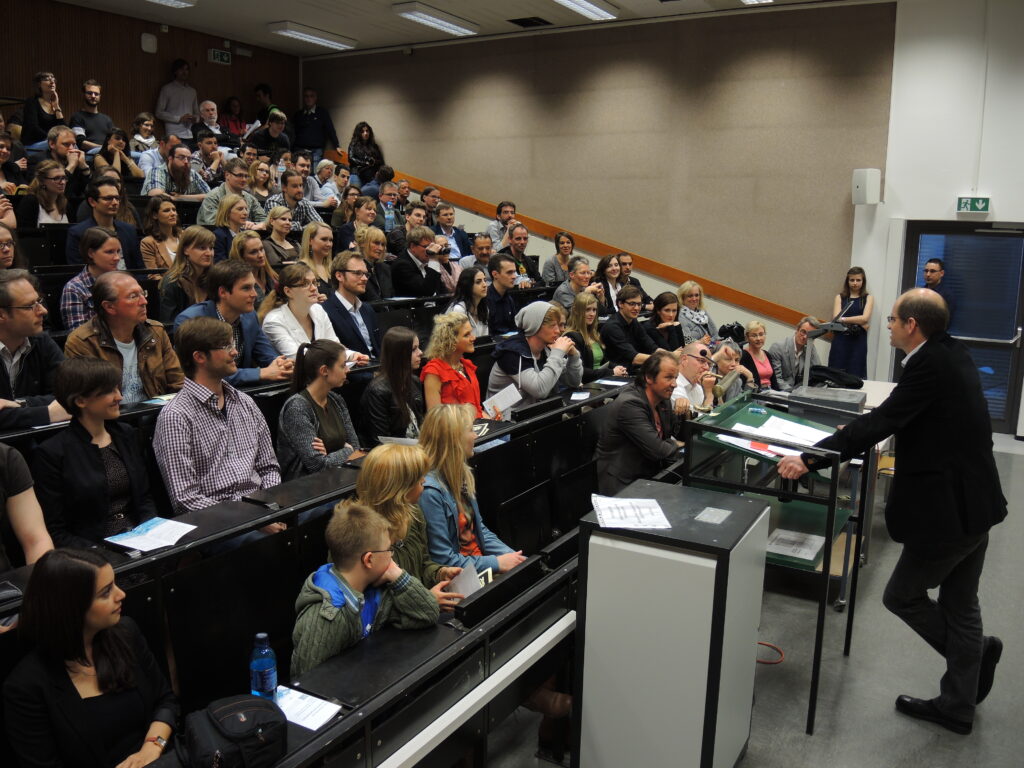
The Department of History and the History student council offer several events for new bachelor’s and master’s degree students each semester. You can find all events here:
We also make introductory videos available for you. You can find them in the moodle for first-year students here: https://lms.uni-mainz.de. You need to activate your account to access them.
After your initial enrollment, you must complete a one-time activation of your JGU account:
Navigating Jogustine can certainly be a challenge, especially for newly enrolled students. If you have any difficulties during the introduction week, you are welcome to contact the student council for History or the academic advisory office.
Here is the most important link for a quick introduction to complicated cases:
Starting a program of study may seem easy at first: After all, how different can it be to studying history at school? That’s what many students think upon first starting at the Department of History. But then everything is a little different after all.

This is where we want to step in and help you. Experienced members of the student council (these are students like you – specifically, your representatives at the Department of History), are available to help you with any and all questions you might have in the first and second semester. This offer is intended to help you get all the information you need to get a good start into your studies – and to help you find out things like whether or not this program is the right one for you, how to earn money while you study, where to find Wi-Fi in the city (this is important for active participation in seminars), where to buy books (meaning actual physical books at bookstores), along with other tips by students for students. The mentors help you sort through the overload of information you will receive during the introduction week and advise you when planning your semester and choosing your courses.
Your entry points to all this are the meetings in the introduction week, during which can you get to know the student council, and specific dates during the semester, which each focus on an upcoming topic in the course of the semester.
General deadlines and dates for a program of study at JGU:
Deadlines and dates of the Department of History and information events in the current semester:
Figuring out how to organize your course of studies is associated with subject-specific questions and decisions, such as: What does the course sequence look like? Which modules can be combined? How many credit points can you earn with the modules and which achievements are recognized?
Subject-specific information for students can be found on the website of the corresponding degree program.
If you are looking for more basic information about the program, you can find it in the degree description via the “Studying at JGU” page.
Do you need individual advising? Our academic advisory offices are happy to help.
You can find all the important information about examinations in our degree programs here:
You can find our thoughts on skills-oriented training here:
The most important dates and deadlines for your respective degree program can be found on the university’s main website or the CampusNet Team/JOGU-StINe website.
Lecture periods, re-registration deadlines, application deadlines (definitive deadlines) and deadlines for a planned change of subject can be found on the JGU Mainz website:
Please follow the target group-specific navigation.
Deadlines for current and upcoming registration phases in JOGUStINe (e.g., for course or exam registrations) as well as registration deadlines for special course offerings (e.g., from the Data Center (ZDV)) can be found on the CampusNet Team/JOGU-StINe website:
Information on the next language exam can be found here:
As part of the introduction week, the Department of History offers a wide range of introductory events for first-year students of history degree programs. You can find these dates here:
You can view the examination dates you are eligible for during the exam registration phase. Please note that if you have to repeat examinations, the dates may be displayed in the semester of the first examination; in other words, you may have to search for your examination. If you cannot find what you are looking for, please contact the examination office for History.
The Department of History offers you the opportunity to pursue a doctorate if you would like to conduct independent historical research after completing your program of study. A wide variety of doctoral topics from antiquity to contemporary history are conceivable within the scope of the department’s focus areas. To pursue a doctorate, an academic staff member with a postdoctoral lecturing qualification (habilitation) from the Department of History must be willing to supervise you and your project. Further information can be found in the regulations and procedures governing the doctorate of the faculty.
Did you study, teach, research, or work at Johannes Gutenberg University Mainz? Or are you currently a student or employee here? Johannes Gutenberg University operates the Gutenberg Alumni Network with a wide range of services for everyone. Stay in touch, network with other experienced persons, and contribute your own expertise!
The History student advising office administers the bachelor’s and master’s degree programs at the Department of History. It is available to students and teaching staff as a contact for program-specific questions or for questions about Jogustine. You can reach the student advising office either in person or by telephone or email at the shared email address studienbuero-geschichte@uni-mainz.de. Please use this address if you are not sure who to address your inquiry to; please do not send parallel emails to several employees.
- Responsible for the organization and coordination of the history degree programs
- Ensuring the proper admission of students to courses in accordance with examination law
- Quality assurance
- Further development of current degree programs
- Registration and deregistration of students for courses in the system
- Semester planning
- Advising students and teaching staff on examination issues
- Planning examination dates and examination corridors in coordination with the examiners and other responsible bodies
- Administration of exam registrations and exam data in Campusnet/JoguStine
- Registration and deregistration of students for examinations
E-mail: shahla@uni-mainz.de
Phone: (49)-6131-39-20195
Fax: (49)-6131-39-20324
Office: Philosophicum, Room 01-543
Sprechzeiten:
Nach Vereinbarung per Mail
- Semester planning and administration of courses in Campusnet/JoguStine
- Spatial planning
- Participation in the course-related work of the study management team
- Administration of teaching contracts
The “link” between the administrative tasks of the academic offices and the actual “academic area” of the teaching staff is a degree program officer for each degree program. This person belongs to the group of university teaching staff. The program representatives work closely with the study management and bear the ultimate responsibility for the proper implementation of the examination regulations and module catalogs. In addition, they should be particularly active in cases of conflict between the study offices and the academic teaching staff.
We offer a wide range of academic advising on all questions relating to studying history at Johannes Gutenberg University Mainz and are also happy to support you in the transition phases between school, program of study and transition to a profession. We have organized our advisory services thematically in the menu tree on the left so that you can find the right person to answer your questions. Please take a moment to think about which topic your questions can be assigned to.
Please contact the relevant academic advisory offices and make use of the consultation hours. Some questions will certainly be resolved if you follow our first aid links or use the university’s interdisciplinary information services. If you are unsure who to address your query to, use this address: studienberatung@geschichte.uni-mainz.de. Please do not send emails with the same request to several academic advisory offices and employees of the Office of Student Affairs at the same time.
The academic advisory office specializes in specific subject areas:
- Where can I find support if I have difficulties with event or exam registration?
- What deadlines do I have to meet?
- Why doesn’t “the Jogustine” do what I tell her?
- How can I plan my program of study sensibly?
- What proof of language proficiency do I have to provide when studying history?
- How can I organize my academic papers better?
- What can I do if I am unsure whether I have made the right study choice?
- How do I prepare for examinations?
- What do I have to consider when I want to log in my bachelor’s thesis?
- Does a master’s degree program make sense for me, and what requirements does it have?
- …
The History Examination Office is part of the Central Examination Office in Faculty 07: History and Cultural Studies. Ms. Shahla, who supervises examination matters in the History degree programs, has been delegated by the faculty to the History seminar for these tasks. Instructions on examination law on the website of the Central Examination Office in Faculty 07: History and Cultural Studies therefore generally also apply to the History Seminar.
- Advising students and teaching staff on examination issues
- Planning examination dates and examination corridors in coordination with the examiners and other responsible bodies
- Administration of exam registrations and exam data in Campusnet/JoguStine
- Registration and deregistration of students for examinations
E-mail: shahla@uni-mainz.de
Phone: (49)-6131-39-20195
Fax: (49)-6131-39-20324
Office: Philosophicum, Room 01-543
Office hours:
Currently only by appointment by e-mail; later again Tuesday, Wednesday and Thursday 09:30-11:30 a.m.
- I have been threatened as a person or as a member of a group (because of my appearance, my gender, my sexual orientation, my nationality, my religion, etc.).
- I have been approached by people or groups that I would classify as radical, racist, misogynistic or anti-healthcare.
- I have come across statements or activities in my university environment that I would classify as such an environment, but I am unsure whether I am perhaps wrong.
JGU offers its members, especially its students, a specialized advising and support service as a component of its diversity strategy: For example, as part of the implementation of a diversity-sensitive university culture, a further step towards an equal opportunity and low-discrimination university was taken with the institution of an Anti-Discrimination Officer position in the Equality and Diversity Office. Ms. Gonca Sariaydin is the anti-discrimination officer. She has already headed several anti-discrimination projects for various ministries and most recently an anti-discrimination office at a higher education institution in Hesse. The office’s task is to offer affected students and members of the university a contact point and to develop prevention and awareness-raising offers.
- Where can I find the right contact points and contact persons?
- What are the advantages of studying history in Mainz?
- Which degree program is right for me: B.A. or B.Ed.
- Is studying history the right thing for me?
- What requirements do I need for admission to the History degree program?
- Where can I get a placement in the appropriate academic semester if I want to transfer to Mainz?
- Which credits from my home university will be recognized if I transfer to Mainz?
- Which credits will be recognized if I want to change degree programs or start studying for two degrees?
- Can I already complete courses for the Master’s degree during my Bachelor’s degree? How can they be recognized?
- …
Studying with children / Studying with physical and mental impairments (“disadvantage compensation”) / Studying under the conditions of caring for relatives, etc.
Many students are restricted in their program of study by factors that do not stem from their studies themselves. These include, for example, physical or psychological impairments. Studying with a child can also cause difficulties due to limited childcare hours. According to legal requirements, we are obliged to provide appropriate support in these cases and are happy to do so. You are welcome to contact us about this. Everything you talk about is, of course, confidential.
- Where can I find advice if I have problems with the organization of my studies in particular life situations?
- Who can support me in applying for disadvantage compensation?
- I often have bouts of illness and/or absences during examinations – what options are there to help me study successfully despite this?
- My children are only supervised in the mornings before 12 noon – how do I organize the program of study around these childcare hours?
- me@jgu – a portal of the Mental Health Services for Students at JGU Mainz to support more serenity in the program of study
- General Students’ Committee for the Disabled at Mainz University
- Barrier-free – JGU service for students with disabilities
- Accessibility on the JGU Mainz campus
- Information and advice center for programs of study and disability of the Deutsches Studentenwerk (IBS)
- JGU Mainz offers for students with children
- JGU’s Family Services Center at JGU Mainz
- Autonomous presentation for parents in the General Students’ Committee
There is another parent-child workroom in the departmental library in the Georg Forster building. This is located in the basement of the departmental library (room no. -1.423). This room is primarily intended for parents with children. If the study room is used by students without children, you can ask them to leave the space to you.
A third parent-child room is located in the Kreuzbau. In addition to a nappy-changing and breastfeeding corner, there are also computer workstations and the option to prepare or heat up food.
Johannes Gutenberg University Mainz supports students with disabilities so that they can complete their program of study on campus as independently and unhindered as possible. The point of contact for students with disabilities and for on-site supervision in Mainz is JGU’s Service for Students with Disabilities. The employees have extensive experience and will be happy to work with you to develop a customized solution for any problems that arise in connection with your program of study at JGU. The service for students with disabilities and chronic illnesses at Johannes Gutenberg University Mainz provides information about accessibility on campus. On the website(http://www.barrierefrei.uni-mainz.de) you will find a large number of useful links on all kinds of topics, as well as a detailed photo gallery and collection of accessible buildings and lecture halls.
Further offers for disabled and chronically ill students from the Service for Students with Disabilities are:
- social law issues
- Organization and financing of assistance in the program of study and everyday life
- Dealing with authorities and institutions
- overcoming personal problems and crisis situations
- psychosocial issues
- applying for technical aids and personal assistance
We have aids for the visually impaired and blind available for you. Currently:
- Workstation for the blind with 80r Braille display and voice output
- Visually impaired workstation with large print and voice input and output
- Laptop with large print and voice output
- Rental equipment
- Reader and expansion of the pool of aids
Other aids, hardware or software products can be organized and purchased on request. Further information can be found on our website: http://www.barrierefrei.uni-mainz.de/unseren-hilfsmittelpool/.
- Help with scanning documents
- Printout in braille
- Support with research, e.g. in libraries and/or on the Internet
- Reading aloud service or organization of personal assistance
- Commissioning of sign language interpreters
- on site, i.e. on the JGU campus in Mainz and Germersheim, supervision and support
- Assistance with exams and term papers and their preparation
- Who will issue me with Bafög certificates (pink form) and which services do I need for the course certificate?
- What options are there for financing the program of study?
- Where can I find information on student loans or fellowships?
- Who can I turn to in a financial emergency?
- …
- You can find lots of helpful advice on the “Studying Plus” page
- Very helpful is the page “Bafög. More for you” of the BMBF
- To the JGU Bafög information
- Informationen zu Stipendien und Studienkrediten. Siehe auch hier: Ratgeber und Selbsttest.
- Fellowships for teaching degree students
- Instructions on student financing from arbeiterkind.de, local group
- Support from the Study Compass
If you need a course certificate for the Federal Training Assistance Office, you should have it issued on the form provided by the academic advisory office if possible. You can find the form “Leistungsbescheinigung nach § 48 BAföG” here: https://www.bafög.de/bafoeg/de/antrag-stellen/alle-antragsformulare/alle-antragsformulare_node.html, general information on course certificates at https://www.bafoeg-aktuell.de/bafoeg/leistungsnachweise.html. The aforementioned form can also be submitted instead of the reporting document introduced at JGU Mainz.
You will find current instructions on Bafög regulations on the following pages. Important: Do not hesitate to submit proposals if your financial situation or that of your parents deteriorates!
Ausführliche Informationen zum Thema BAföG können Sie auf den Seiten des Bundesministeriums für Bildung und Forschung abrufen.
The student loan is a temporary, low-interest loan to support students and pupils in advanced phases of their education. It is available alongside or in addition to BAföG. There are also special student loans. At Mainz University, student loans from the Kreditanstalt für Wiederaufbau (KfW) are granted via the Studierendenwerk Mainz.
Further instructions on financing options can be found here:
The Historical Seminar cannot advise you on BAFöG itself; this is the responsibility of the Office for Educational Support.
However, we can help you to compile the documents required for BAföG, i.e. the information to be provided in the subject. These are in particular course certificates for BAföG matters. In order to obtain the relevant confirmation, you must go to the academic advisory office with the Federal Training Assistance Office’s form (pink certificate of “usual achievements”) to have the confirmation issued there. This conversation is often very productive and an important support; please make use of it!
- How do I find my personal answer to the question of what you can do with a history degree?
- Where can I find information on appointments for historians?
- How can I plan my transition to a profession during my program of study?
- Which internships are suitable for me?
- Where can I find out about further training opportunities and academic job vacancies?
- …
Please also use the blog“History and Appointments” for orientation. Certificates for the “compulsory internship” can be obtained from Dr. Freia Anders.
- What are the didactic requirements of the history teacher education program?
- How do I prepare for the M.Ed. thesis?
- What do I have to consider when I log in for the state examination or the extension examination?
- Where can I find information about the third-subject extension examination certificate course?
- What requirements should I meet for a successful program of study abroad?
- How do I apply for a program of study abroad?
- What do I need to bear in mind when preparing my stay abroad?
- How can I fit a stay abroad into my degree plan?
- Which of my achievements abroad can be recognized?
- What are the strengths of the Integrated German-French Study Program Mainz/Dijon?
- Information on the international courses offered by the History Seminar
- Information on the Mainz-Dijon study program / Dijon Office
- Information on lecturer mobility
- Blog: Historians crossing boundaries – Mainz history students blog from their stay abroad
Each semester, we offer events on various counseling topics:
Montag 12. Januar 2026, 14-16 Uhr im Besprechungsraum im Erdgeschoss des Philosophicum-II (Flur des Zentrums für Lehrerbildung) (Verena von Wiczlinski, Andreas Frings)
Wir informieren Sie über die Modalitäten der Bachelorprüfung sowie Fragen des Zugangs zum Masterstudium: 5. November 2025 (Mittwoch), 12-13 Uhr, Microsoft Teams-Besprechung,
Jetzt an der Besprechung teilnehmen
Besprechungs-ID: 399 070 849 687 1, Passcode: eM9DZ2gE
Wir bieten Ihnen ein Bewerbungstraining zum Berufseinstieg für Historiker*innen an: gemeinsam mit Kommiliton*innen können Sie üben, ihre Profile mit Stellenangeboten oder den Anforderungen potentieller Praktikumsgeber abzugleichen: 21. Januar 2026 (Mittwoch), 16-19 Uhr, Voranmeldung unter Vorlage von (fiktiven oder tatsächlichen Bewerbungsunterlagen) bis 10. Januar 2025: anders@uni-mainz.de.
Besuch des Geschichtsorts Adlerwerke – Fabrik, Zwangsarbeit, Konzentrationslager – in Frankfurt am Main, Führung durch die Ausstellung und Workshop zur Gedenkstättenarbeit mit biographischen Quellen: 18. November 2025, 10-13 Uhr, vor Ort, Voranmeldung bis 9.11.: anders@uni-mainz.de.
Johannes Gutenberg University Mainz has a wide range of information and counseling services. On this page you will find a list of the most important links.

